 (Image source: Gemini)
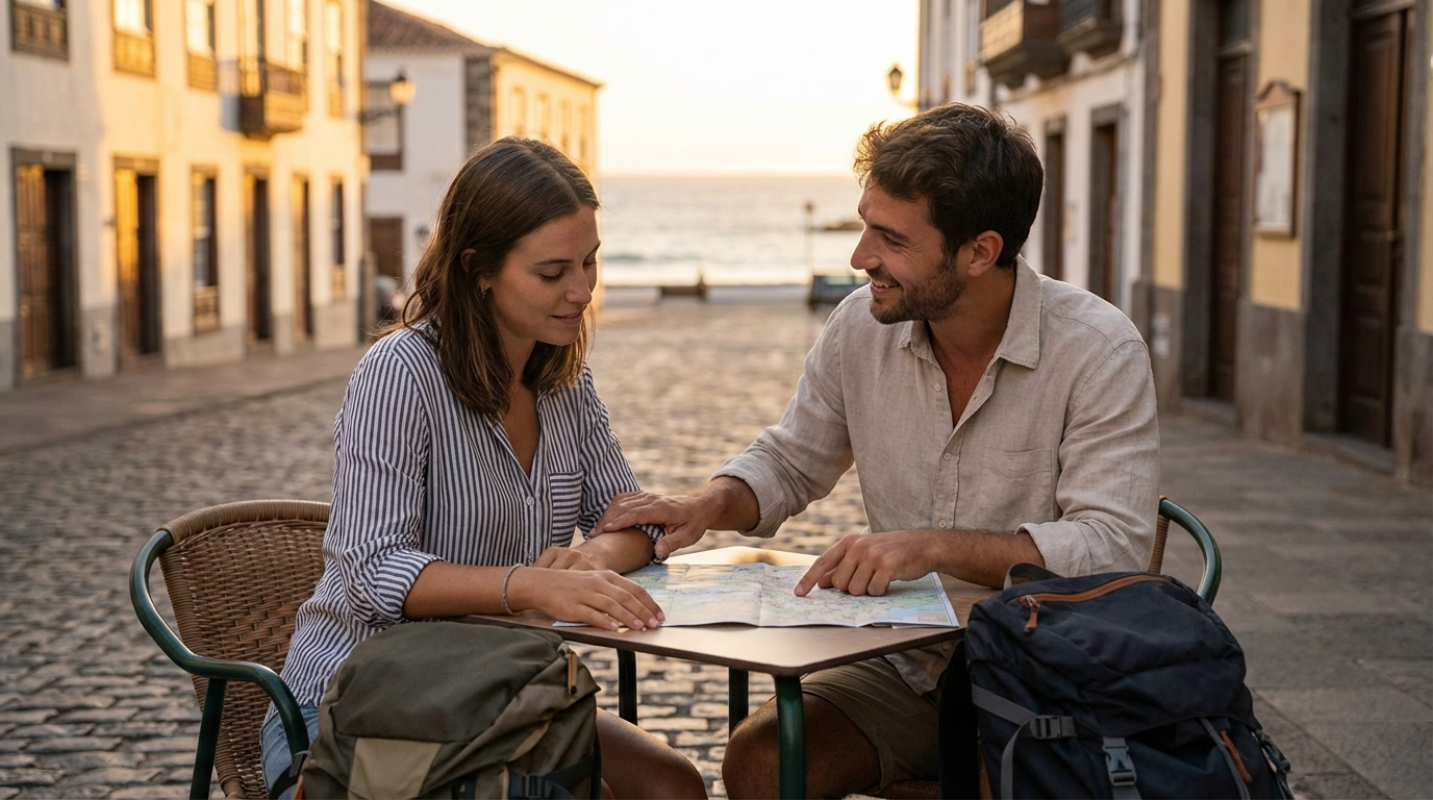
 You’re standing on a crowded train platform in a city where you don’t speak the language. Your bags are heavy, the sun is setting, and you’ve just realized you’re heading the wrong way. In the middle of this minor chaos, you look at your best friend. Instead of the usual annoyance, you feel a sudden, sharp jolt of something else. It’s not just gratitude that they’re handling the map. It’s attraction.
Shared travel is a pressure cooker for human emotions. It strips away the polished versions of ourselves we present at Friday night dinners or quick coffee catches. When you’re navigating a foreign country together, you’re seeing the raw, unedited footage of another person. You see how they handle stress, how they treat service staff, and how they look at 6:00 AM after a sleepless flight.
This unique environment often acts as a catalyst, pushing a platonic bond into romantic territory faster than a year of traditional dating ever could. But while the "friends-to-lovers" trope is a staple of romantic comedies, the reality on the ground is a bit more complicated. How do you handle that shift when you’re still three days away from a return flight?
Why Travel Accelerates Feelings
Psychologists often refer to travel as a relationship magnifying glass. It removes the usual brakes of daily life (the boring stuff like laundry, work emails, and grocery shopping) and replaces them with novelty and challenge. This creates a psychological state known as self-expansion.
The Self-Expansion Theory suggests that we have a fundamental drive to grow and integrate new perspectives into our own identity. When you travel with a friend, you’re constantly engaging in novel activities. Whether it’s hiking a new trail or trying a bizarre local delicacy, these shared challenges build a deep sense of vulnerability and triumph.
Recent data shows that 73 percent of couples actually consider travel to be the ultimate test of a relationship. If it’s the ultimate test for established couples, it’s an even more powerful accelerator for friends. You aren't just getting to know someone. You’re seeing their "authentic self" that was previously tucked behind a platonic mask.
Understanding the Transition
So, you’ve realized the feelings are there. What now? Moving from platonic to romantic during a trip is a delicate dance. You don’t want to make the rest of the itinerary awkward, but you also don't want to miss a genuine connection.
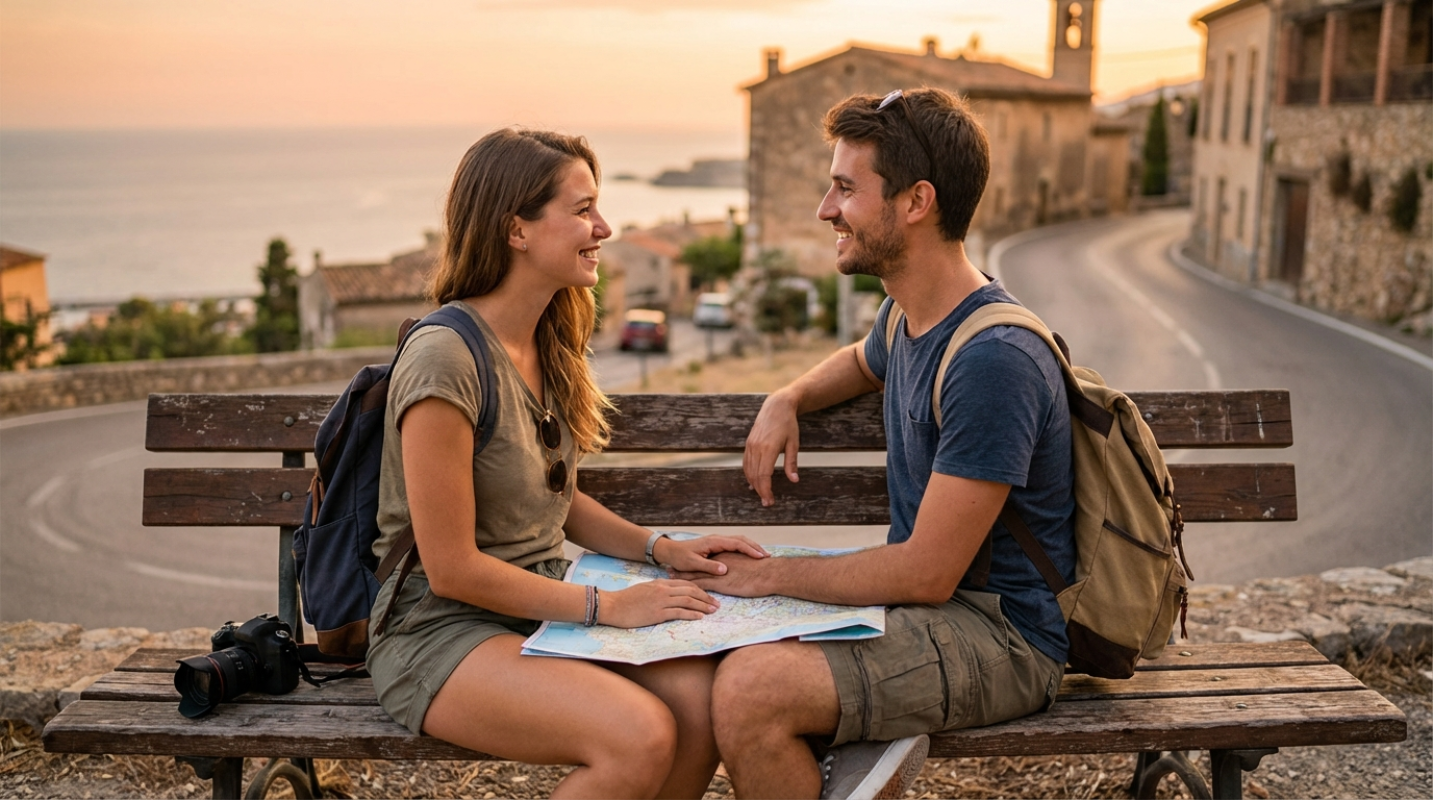
The first step is reading the room. This isn't about a grand, cinematic confession in the middle of a museum. It’s about subtle cues. Are you sitting a little closer than usual? Is the eye contact lasting a second longer? Research shows that 68 percent of romantic relationships now start as friendships, so you’re actually in the majority here.
If the vibes seem mutual, the important conversation needs to happen sooner rather than later. You don't need to define your entire future, but you do need to acknowledge the shift.
This conversation is the digital equivalent of a software update for your relationship. It’s necessary to avoid the "weird zone" where both people are overthinking every touch or comment. By addressing it directly, you give the other person the space to either reciprocate or set a boundary that protects the friendship.
Managing the Shared Itinerary
Once the cat is out of the bag, the logistics of the trip can get tricky. If the feelings are mutual, the transition to sharing a bed or being more affectionate can feel like a natural progression. But if the feelings aren't shared, you’re suddenly in a very small Airbnb with someone you’ve just made things awkward with.
Handling rejection gracefully is the most important skill you can have in this scenario. If your friend doesn't feel the same way, you have to be the one to bridge the gap back to normalcy. It’s your responsibility to show them that the friendship is still safe. This might mean taking an afternoon to do separate activities to let the dust settle.
Intimacy on the road also has a double-edged sword effect on group travel. If you’re traveling with a larger group of friends, your new romance can change the group dynamic. Nobody wants to be the "third wheel" to a brand-new couple that’s constantly whispering in the corner.
Transitioning from Adventure to Daily Life
The biggest challenge isn't usually the trip itself. It’s the re-entry into reality. There is a documented phenomenon where the "vacation spark" starts to fade almost immediately after you land. Recent studies from the past year indicate that these feelings typically start to fizzle out just 6.5 days after returning home.
To make the relationship last, you need a post-trip reality check. Experts suggest scheduling a "relationship check-in" within the first week of being back. Ask the hard questions. Was this just the magic of the Mediterranean, or do we actually want to date in the real world?
Letting a friendship evolve into romance is a risk, but it’s often one worth taking. You’re starting with a foundation of trust and shared history that most "slow dating" apps can only dream of. Just remember that while travel can accelerate the connection, it doesn't create compatibility out of thin air. It simply shows you what was already there, hidden in plain sight.