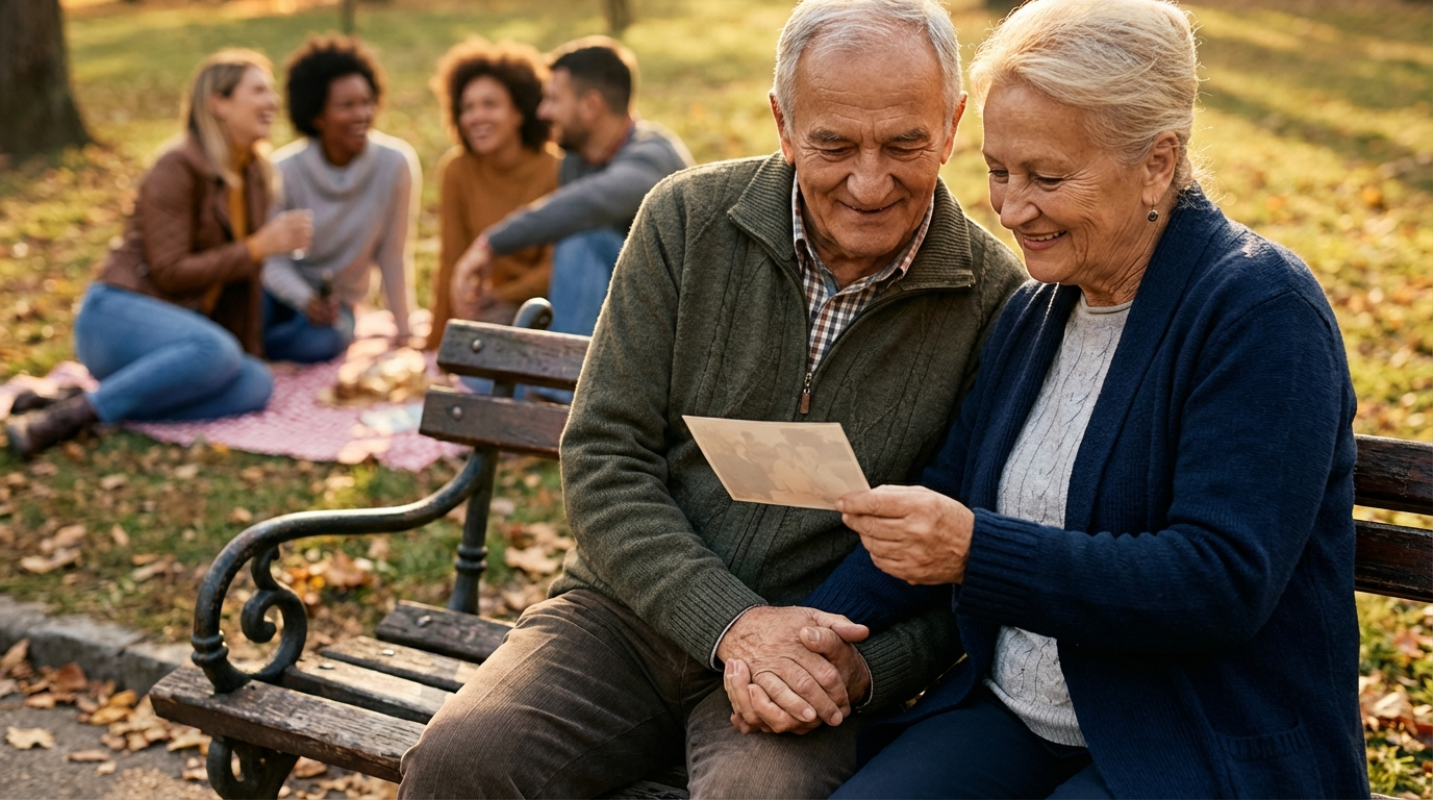
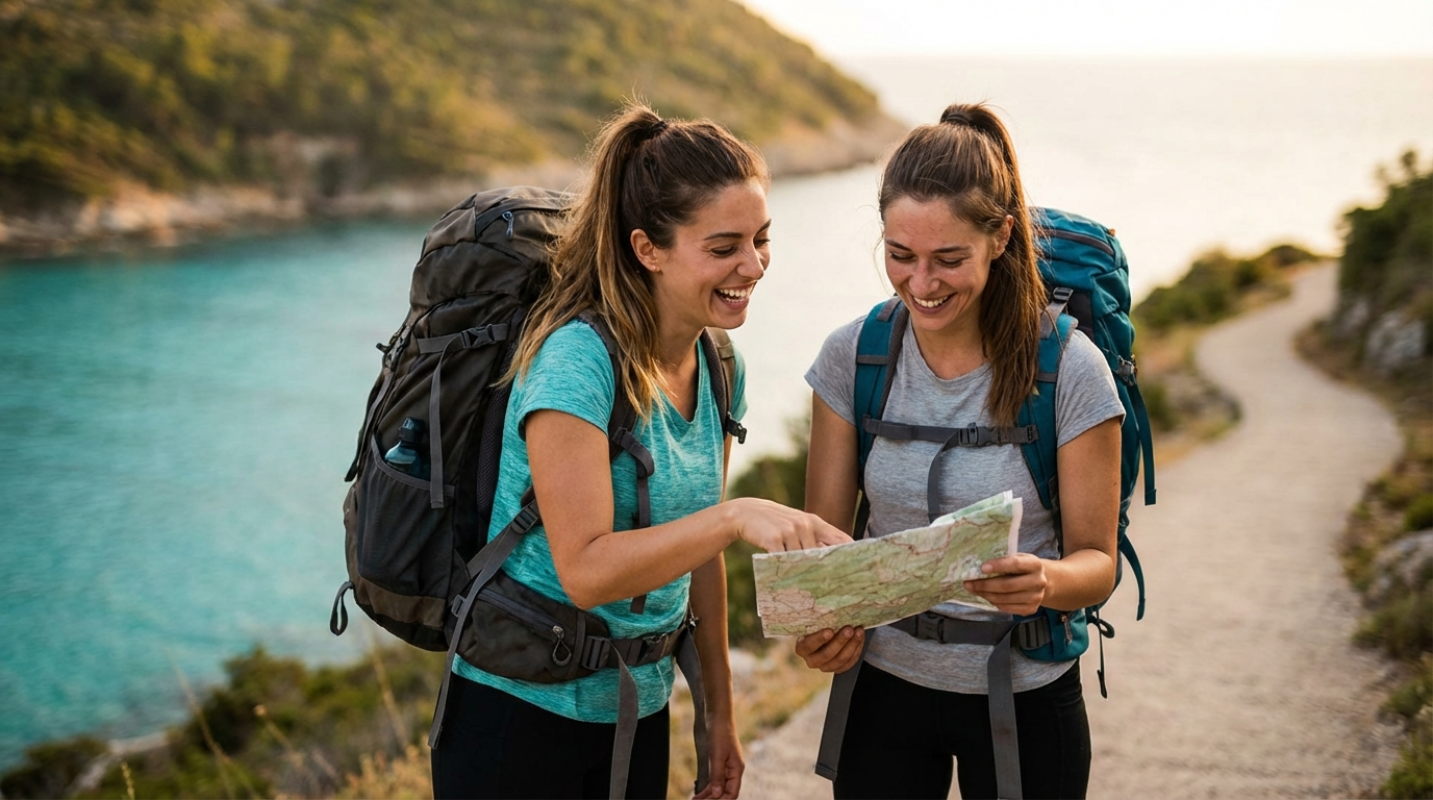
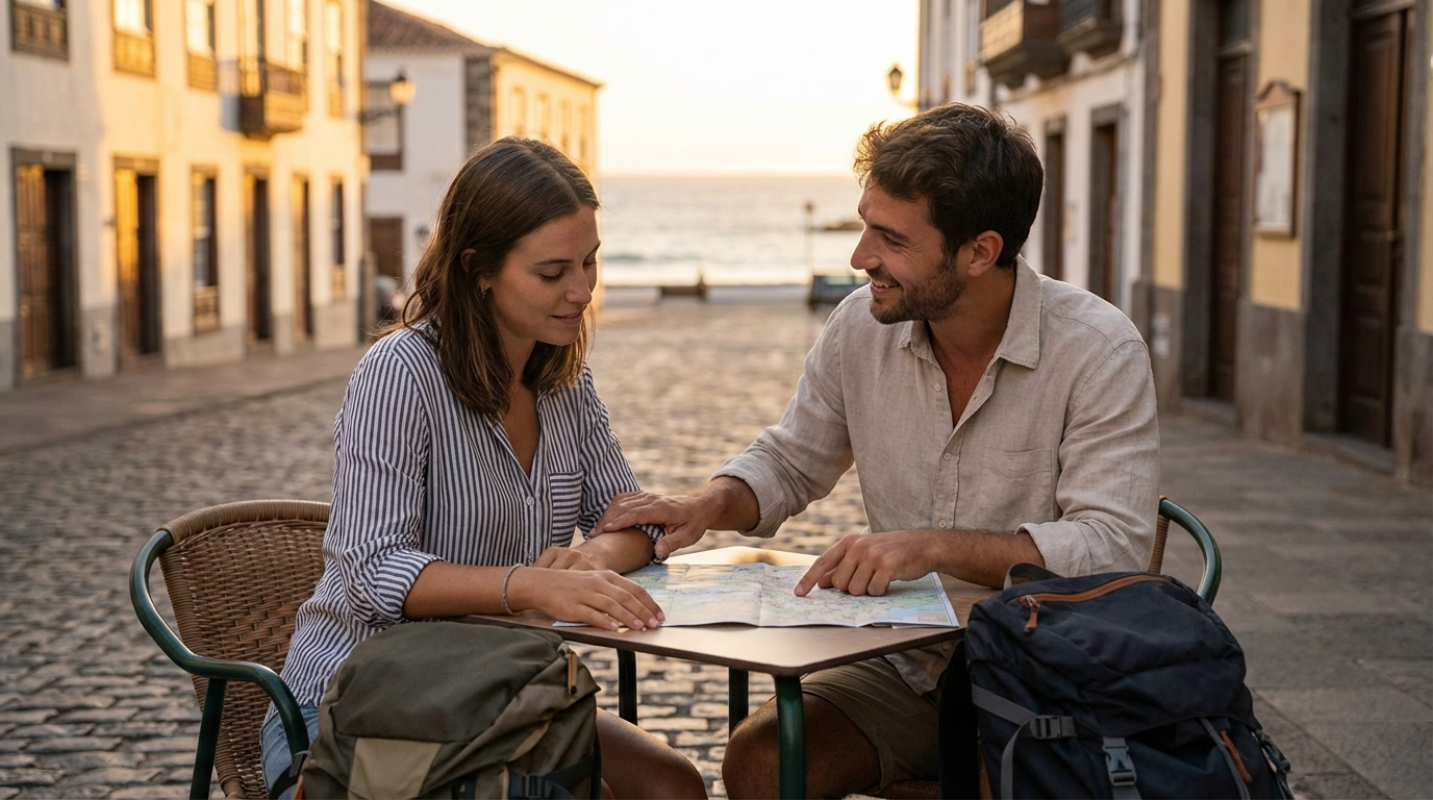
 (Image source: Gemini)
 You are standing on a train platform in Tokyo or maybe a windy cliffside in Ireland. The air is cold, the logistics are messy, and you are exhausted. Suddenly, your travel buddy reaches out and adjusts your scarf, letting their hand linger just a second too long. In that moment, the entire energy of the trip shifts. You aren't just looking for the nearest ramen shop anymore. You are wondering if your platonic partnership just took an unplanned detour into romantic territory.
Travel has a way of stripping back the layers we usually keep on for our 9-to-5 lives. It’s a pressure cooker for human connection. In 2026, we are seeing a massive shift in how people approach these bonds. We’ve moved past the era of mindless swiping and into what experts call the Connections IRL trend. People are tired of digital burnout and are looking for something real.
Shifts in Physical and Emotional Closeness
The most obvious signs start with how they use their body. In a standard friendship, most people respect a social zone of about four to twelve feet. It’s a comfortable bubble. But when someone wants more, that bubble starts to shrink. They will consistently seek your side. If you are walking down a narrow street, they aren't trailing behind or leading the way. They are right there, shoulder to shoulder.
Watch for the micro-touches. These are the "accidental" knee-grazing moments during a long bus ride or a hand on the small of your back as you handle a crowded market. These aren't just functional movements. They are the proximity test. If they are moving into your personal zone (about 1.5 to 4 feet) without a clear reason, they are testing the waters of attraction.
Emotional vulnerability goes hand-in-hand with this. Travel triggers something called Self-Expansion Theory. When you try new things together, like paragliding or navigating a foreign subway, your brain releases dopamine. This makes you see your companion in a new, more attractive light. If your buddy starts sharing deep secrets or past relationship struggles that go way beyond typical "bro" talk, they are trying to build an emotional bridge. They are moving from being a travel partner to an emotional partner.
The Language of Attraction
Pay attention to how they talk to you and about you. Excessive compliments are a major red flag for hidden feelings. A friend says, "Good job on the directions." A person who wants more says, "I love how your eyes light up when you finally find the right street." They stop focusing on your travel skills and start focusing on your unique qualities or your appearance.
You might also notice a shift in their language when talking to others. Do they use possessive or couple-oriented language? If they are telling a story to a group of new friends at a hostel and keep saying "we" and "us" in a way that implies a unit rather than two separate people, they are subconsciously trying on the "couple" label.
Frequent check-ins are another sign. In 2026, we are always connected, but there is a difference between a logistical text and a "just thinking of you" text when you are only in separate rooms for twenty minutes. If they are constantly messaging you or sending you memes and travel reels while you are literally in the same building, they are craving your attention.
They might even start testing the waters for a shared future. Have you heard them ask things like, "Could you ever see yourself living in a city like this with someone?" or "What do you think our dynamic will be like once we get home?" They are looking for a shared future outside of the airport terminal. They are checking for compatibility under stress, something that 69% of global travelers now do intentionally before committing to a relationship.
Travel Habits That Signal Intent
Let's talk about the grooming rituals. We all know the "traveler look." It’s usually messy hair, wrinkled shirts, and a general lack of concern for aesthetics. But if your buddy is suddenly spending forty minutes in the shared bathroom before a simple morning walk, something has changed. They are preening. If they are putting in effort to look good in a situation where "good" isn't required, they are doing it for you.
Protectiveness is another massive indicator. A good friend will help you find your lost passport. A buddy who wants more will go out of their way to make sure your comfort and safety in ways that feel almost parental or partner-like. They’ll check if you’re warm enough, offer you their jacket before you even ask, or handle the difficult logistics with a grumpy taxi driver just so you don't have to deal with the stress. They are moving into a provider role.
You should also listen for the comparisons. If they start telling you how you are "different" from their other friends or how you are better than their past partners, they are laying the groundwork. They are telling you that you’ve been promoted in their mind.
Responding to the Signals
So, you’ve spotted the signs. Now what? You can’t just ignore the elephant in the carry-on bag for the next three weeks. The worst thing you can do is let the tension build until it explodes in an awkward moment at 3:00 AM in a train station. Clear communication is the only way to avoid a post-trip fallout.
If the feelings aren't mutual, you can still save the friendship. The key is to acknowledge the shift and then pivot back to the shared goal: the trip. Remind them why you value them as a travel partner. If you do share those feelings, well, congratulations. You’ve just joined the 16.4% of travel romances that evolve into long-term relationships.
Packing Up Your Assumptions
Reading the signs of a travel buddy's attraction requires you to trust your gut. If it feels like they are looking at you differently during a sunset in Santorini, they probably are. Features soften, pupils dilate, and the gaze lingers a few seconds longer than it should. These are physiological responses that are almost impossible to fake.
Whether this shift leads to a lifelong romance or stays a cherished memory of a "what if" moment, understanding the change matters. Travel changes us. It makes us more open, more vulnerable, and more likely to find connection in unexpected places. Don't be afraid of the shift in the itinerary.