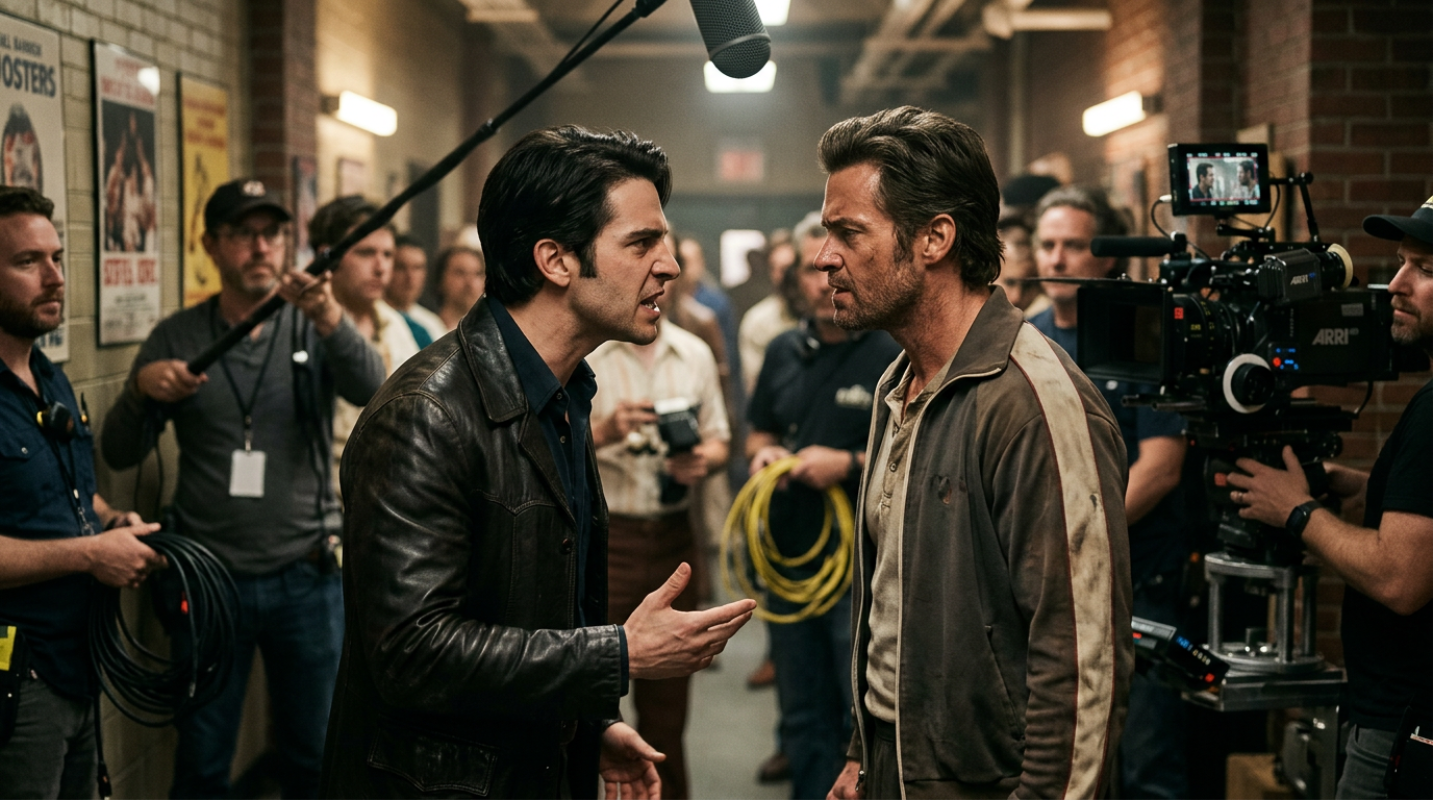
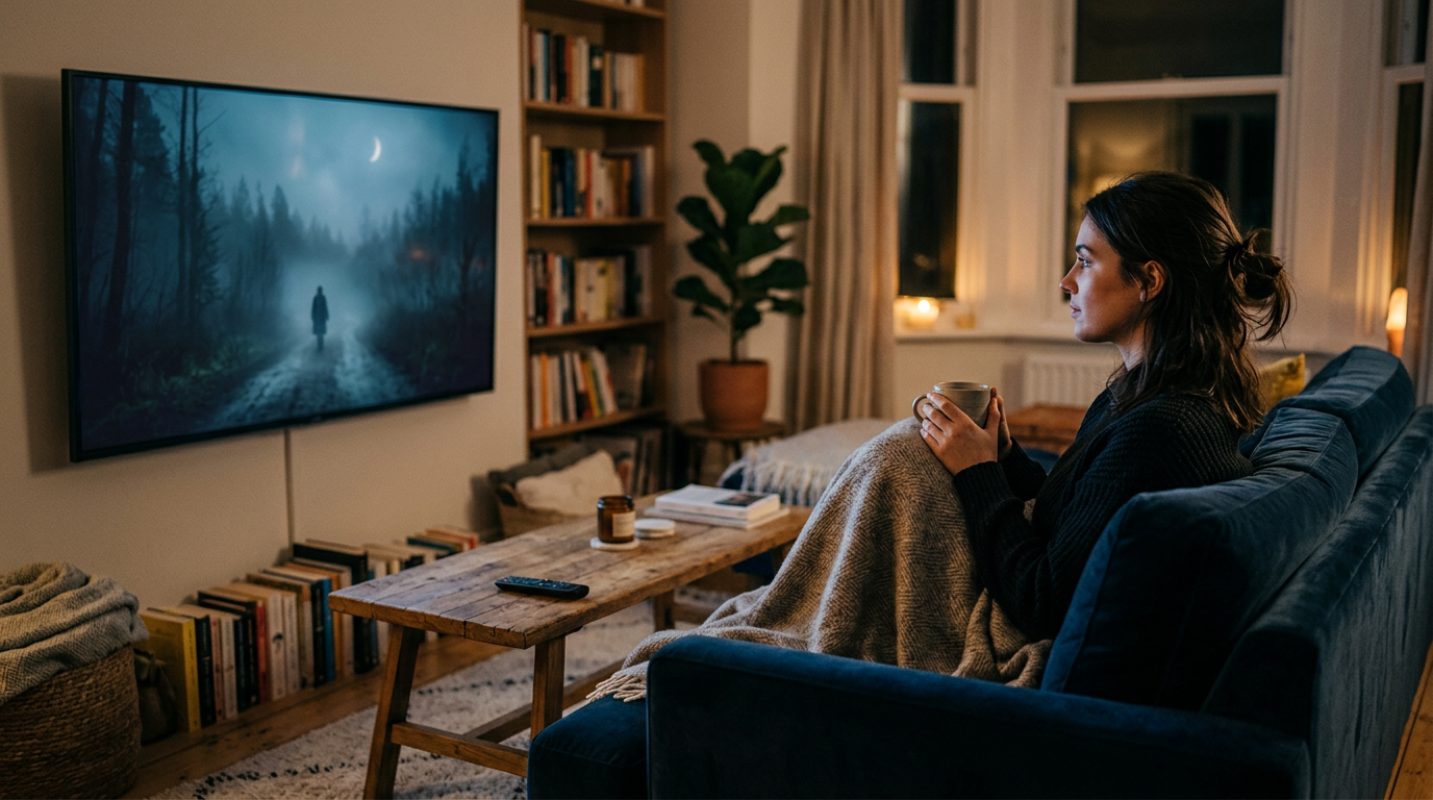
 (Image source: Gemini)
 Have you ever finished an entire season of a show and realized you couldn't actually explain the plot to a friend, but you could describe the exact shade of green on the office walls? You aren't alone. We’ve entered an era where the vibes of a series often carry more weight than the actual mechanics of the story. This isn't just a happy accident. In 2024 and 2025, streaming platforms leaned hard into sensory immersion. They started betting on the idea that you’d rather feel something than just follow a sequence of events. It’s a shift away from the "puzzle box" storytelling that dominated the last decade.
Instead of asking "what happens next," these shows want you to ask "how does this place make me feel?" High-end production design has moved from the background to the starring role. It’s the digital equivalent of walking into a high-end gallery where the lighting matters just as much as the art on the walls.
Immersion as the Primary Objective
Think of it like this. Traditional TV is like a treadmill that keeps you moving toward a destination. Atmospheric TV is more like a sensory deprivation tank. It’s designed to wrap around you until the real world fades away.
Cinematography and sound design have taken over the heavy lifting that dialogue used to do. You’ll see long, lingering shots of a character just existing in a space. There’s a psychological appeal to this "slow television" approach. It builds a kind of tension that doesn't rely on jump scares or cliffhangers.
These shows focus on building worlds that feel lived in. They aren't just sets with actors hitting marks. They’re environments where the sound of a radiator clicking or the way light hits a dusty window tells you more about the character’s mental state than a three-minute monologue ever could.
Case Study Shows That Master the Mood
Look at a show like Ripley, which hit Netflix in 2024. It was shot entirely in high contrast black and white by Robert Elswit. The series prioritizes what critics call the "texture of waiting." It lingers on the bubbles in a glass of prosecco or the heavy sound of footsteps on Italian cobblestones. The atmosphere is so thick you can almost smell the sea air, even if the actual con moves at a glacial pace.
Then there’s Pluribus on Apple TV+. Created by Vince Gilligan, it’s a surrealist noir that some viewers complained was just a woman "wandering around." Gilligan leaned into that critique because the wandering is the point. The show creates a "sinister placidity" where everyone is hauntingly content, making the atmosphere the primary source of dread.
Even the horror genre is getting a vibe check. Alien: Earth used slow-moving shots of liminal spaces and a psychedelic soundtrack to create deep cognitive dissonance. Critics noted that showrunner Noah Hawley seemed more interested in "existential chilling" than a traditional monster hunt.² It’s about the feeling of being somewhere you shouldn't be.
Top Recommendations
If you’re looking to get lost in a world rather than just follow a map, these are the series you should be adding to your queue right now.
- Ripley (Netflix): A masterclass in Noir aesthetics. It’s slow, gorgeous, and cares more about the shadows on the wall than the speed of the plot.
- Pluribus (Apple TV+): A sci-fi noir that feels like an uncanny valley version of our own world. It’s a show you experience rather than just watch.
- Alien: Earth (FX on Hulu): This isn't your standard action sci-fi. It’s a hallucinatory horror that uses sound and light to keep you in a state of constant unease.
- Mussolini: Son of the Century (Mubi): A maximalist fever dream with a techno score. It uses "sensorial bombardment" to show the rise of fascism rather than a dry history lesson.
- The Narrow Road to the Deep North (Prime Video): A gritty, tactile look at trauma. It uses smoke, fog, and handheld cameras to make you feel the weight of the jungle.
The Critics vs. The Audience
This shift hasn't been without its drama. You’ve probably seen the debates online. One person calls a show a "visual masterpiece" while another calls it "boring trash where nothing happens." This was especially true for The Bear Season 3, which polarized fans by focusing on impressionistic moods over the high-stakes kitchen drama of earlier seasons.
The modern entertainment space is starting to favor aesthetic identity over narrative momentum. Why? Because in a world of infinite content, a "vibe" is what sticks with you. You might forget a plot twist, but you won't forget the way a show made you feel while you were curled up on your couch at midnight.
Prioritizing character interiority over external conflict is a bold move. It trusts you, the viewer, to sit with the silence. It assumes you’re smart enough to understand a character’s grief by looking at the way they hold a coffee mug, rather than having them cry about it to a therapist.
Why We Crave Atmospheric Escapism
Binge culture has actually made us more patient in some ways. When you know you have eight hours of a show ready to go, you’re more willing to let it wash over you. We’ve started using shows as mood setters. Sometimes you don't want a complex mystery to solve. You just want to exist in a world that looks and sounds beautiful for an hour.