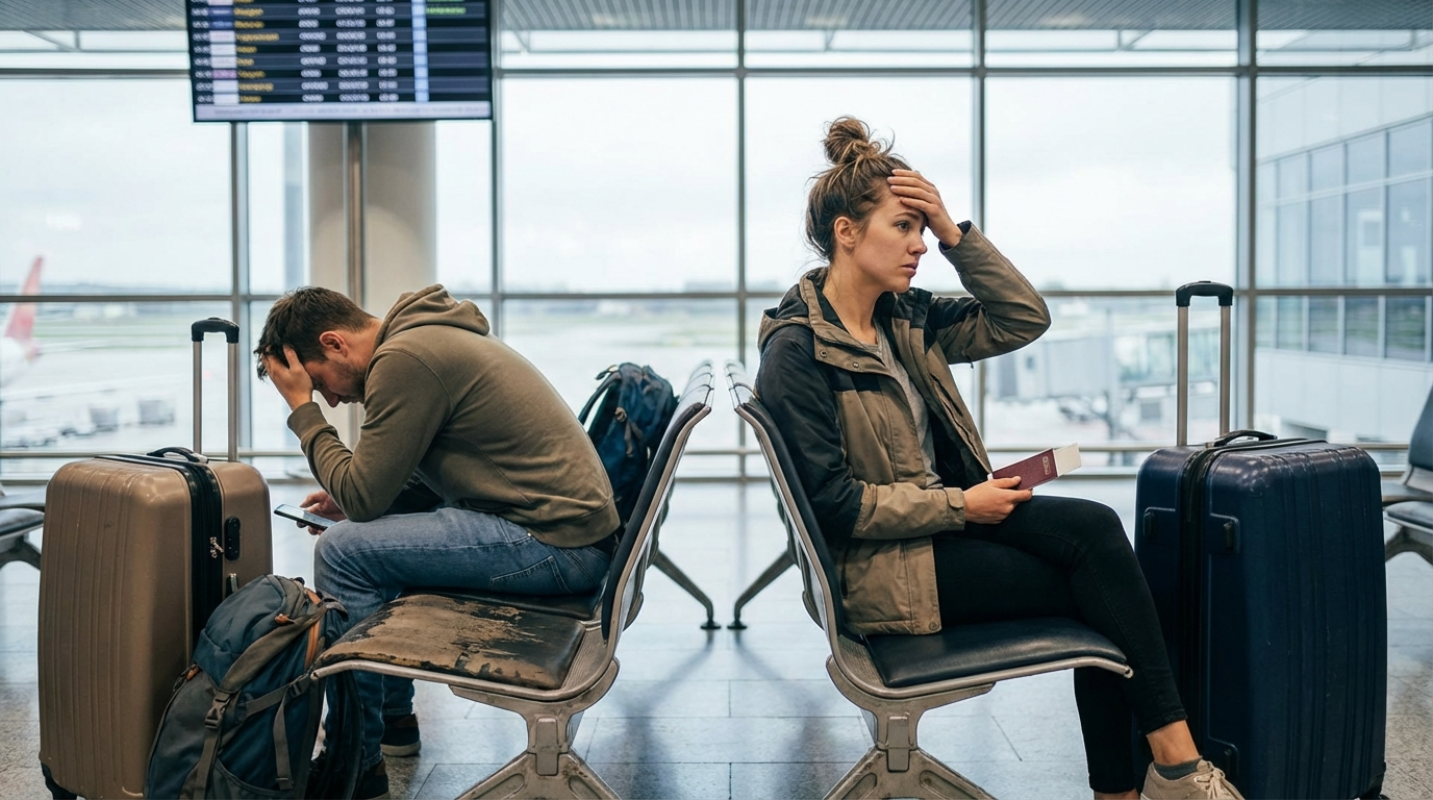
 (Image source: Gemini)
 You've seen the photos on your feed. The glowing sunset in Santorini, the clinking of wine glasses in a Tuscan vineyard, or the perfect "candid" laugh on a white-sand beach. But behind the filter, there's often a different story. Maybe someone is fuming because their partner lost the rental car keys. Maybe there's a cold silence at a five-star dinner because one person spent the whole day complaining about the heat.
It's the classic vacation paradox. We spend months planning and thousands of dollars to "get away from it all," only to find that we brought our stress, our baggage, and our most annoying habits right along with us.
Think of it like a relationship accelerant. If things are going well, travel can make you feel invincible. But if there are cracks in the foundation, the pressure of navigating a foreign city on four hours of sleep will find them. Have you ever wondered why you and your partner, who usually get along fine at home, suddenly turn into bickering strangers the moment you hit the airport?
Identifying Common Triggers
Why does travel turn even the most level-headed people into bundles of nerves? It usually starts with the "Ultimate Test" factor. When you're at home, you have your routines, your separate workspaces, and your own friends. On vacation, all of that disappears.
Financial friction is often the first domino to fall. One of you might want to splurge on a private boat tour, while the other is mentally calculating how many grocery store sandwiches you need to eat to offset the cost. These aren't just arguments about money. They're arguments about values and priorities.
Then there's the logistical nightmare of planning. If one person does all the "heavy lifting" of planning while the other just shows up, resentment starts to brew. This often highlights a clash in travel styles. Are you a "Type A" planner who has every hour mapped out, or a spontaneous "freestyler" who wants to see where the day takes you? When these two worlds collide at a train station with five minutes to spare, it isn't pretty.
How Stress Manifests in Partnerships
When the stress hits, communication is usually the first thing to go. You stop talking about how cool the cathedral looks and start using "you always" or "you never" statements. Passive aggression becomes the default setting. You might find yourself shifting from a constructive dialogue to a blame game.
This erosion of intimacy is a real danger. Stress displaces quality time and emotional connection. Instead of enjoying a shared experience, you're both just trying to survive the day. When we build up a vacation to be a "perfect" romantic escape, any small hiccup feels like a personal failure or a sign that the relationship is failing.
There's also the risk of bottling it all up. You might think you're being "good" by not bringing up an issue while you're in Paris, but that resentment doesn't just disappear. It simmers. The psychological impact of acute stress can linger. If every vacation becomes a series of arguments, you'll eventually stop wanting to travel together at all. This is why it's key to address the pressure as it happens, rather than letting it poison the entire experience.
Proactive Approaches Building a Stress-Resistant Travel Itinerary
The best way to handle travel stress is to prevent it from reaching a breaking point in the first place. This starts long before you pack your bags. Pre-trip negotiation is your best friend. Sit down and establish clear boundaries on the big three: budget, downtime, and "must-do" activities. If you know ahead of time that your partner needs three hours of lounging by the pool every day, you won't feel abandoned when they don't want to go to the third museum of the afternoon.
Delegation is another key tool. Avoid "dumping" all the responsibility on one person. Divide the labor fairly. Maybe one person handles the flights and hotels while the other researches restaurants and local transport. This make sures both partners are "invested" in the trip's success.
Handling Conflict When It Inevitably Arises
Even with the best planning, you're probably going to argue. About 40% of partners report arguing during their vacation, so don't panic if it happens to you. The goal is to repair the damage quickly.
Use the 24-hour rule. If a major issue crops up, try to wait until emotions have cooled before having a "deep" discussion. Addressing a budget crisis mid-meltdown at the rental car counter is never going to end well. Wait until you've eaten and rested.
Reframing setbacks is a powerful psychological trick. Instead of seeing a missed flight as a disaster, try to view it as a shared challenge you're overcoming together. It's you two against the problem, not you against your partner. Benjamin Ritter suggests an "agreement to find it funny." If you can commit to laughing at the absurdity of a situation - like being stuck in a rainstorm in a city where you don't speak the language - the stress loses its power over you.
Traveling Stronger Together
At the end of the day, shared travel is a powerful affirmation of your partnership. Although it can be a "relationship accelerant" for stress, it's also an incredible tool for connection.
When you handle a foreign subway system, try a cooking class in a new language, or hike a trail that pushes your limits, you are building a shared history of resilience. You're proving to each other that you can handle the unexpected.
Preparation and communication are the ultimate travel tools, far more important than the right luggage or a premium credit card. If you go into your next trip expecting a few bumps in the road and equipped with the approaches to handle them, you won't just survive the vacation. You'll come home closer than ever.
This article on bestecute.com is for informational and educational purposes only. Readers are encouraged to consult qualified professionals and verify details with official sources before making decisions. This content does not constitute professional advice.