 (Image source: Gemini)
 Have you noticed how your social media feed feels like a broken record lately? Between the 15-second clips and the endless scrolling, it’s easy to feel like we’re skimming the surface of everything. We’re seeing a massive pivot away from short-form digital noise toward deep-dive reading. People are hungry for more than a headline. They want the whole story.
The books that really stick with you are the ones that transcend the page to become social touchstones. You’ve probably been at a dinner party where someone mentioned the "phone-based childhood" or the "Ozempic effect," and suddenly, the whole table had an opinion. That’s because certain nonfiction works have become the new high-level entertainment.
Reading is about gaining the vocabulary to talk about the world as it actually exists today. These books give you the ammunition for the most interesting conversations in your life. They’re the catalysts for how we understand our neighbors, our kids, and ourselves.
Books That Challenge Our Worldview
When a book challenges the status quo, it doesn't only sit on a shelf. It starts a fire. We’ve seen this recently with releases that tackle our most sensitive sociopolitical shifts. Take Peter Beinart’s 2025 release, Being Jewish After the Destruction of Gaza: A Reckoning. It’s a heavy title, and the content is even heavier. Beinart, a prominent intellectual, argues for a complete moral reconstruction of Jewish identity.
This isn't a dry historical text. It’s a book that has caused literal family fractures. You might have seen the "Family Conversation" prologue go viral on Substack. It prompted thousands of people to share their own stories of friendships ending over the Israel-Palestine conflict. It's the kind of reading that turns a private moment into a public debate.
The power of these contrarian viewpoints is that they force us out of our echo chambers. Whether you agree with the author or not, you can't ignore the argument. This is how intellectual discourse used to work, and it’s making a massive comeback. When a book like this hits the bestseller list, it’s a signal that we’re ready to have the hard conversations again, even if they're uncomfortable.
The Intersection of Technology and Human Identity
If you feel like your brain has been slightly fried by your phone, you aren't alone. One of the biggest cultural conversations of the last two years was sparked by Jonathan Haidt’s The Anxious Generation. Haidt argues that we’ve moved from a play-based childhood to a phone-based one, and it's causing a literal of mental illness. This book started the #PhoneFreeSchools movement.
Entire school districts and even countries like France have started implementing phone-free policies. Have you seen the "Four Norms" challenge on your feed? It’s a direct result of Haidt’s work, encouraging parents to delay smartphones until age 14 and social media until 16. It’s the digital equivalent of a public health warning.
But it’s not merely about the kids. Amanda Montell’s The Age of Magical Overthinking looks at why we’re all so irrational in an era of infinite information. She breaks down things like the "Halo Effect" where we worship celebrities, or the "Sunk Cost Fallacy" that keeps us in bad relationships. These topics are becoming a needed dinner table conversation because they explain why we act the way we do online. It’s a bias-check for your daily life.
Where Storytelling Meets Social Commentary
Some of the most impactful books aren't manifestos. They’re stories. This brand of literary journalism is where entertainment meets deep social commentary. Johann Hari’s Magic Pill is a perfect example. It’s about the rise of Ozempic and other weight-loss drugs, but it’s really about our dysfunctional relationship with food. Hari asks if we’re trading a food-obsessed culture for a "magic pill" that might take away our ability to feel pleasure.
This book fueled the #OzempicFace and #OzempicBody trends on TikTok, where users document the psychological dampening effects of these drugs. It also sparked a massive debate about fact-checking in what people call "fast-nonfiction." When Hari was called out by food critic Jay Rayner for a false claim, the rebuttal went viral. It reminds us that even when we’re being entertained, we have to keep our important thinking caps on.
Then you have John Green’s Everything Is Tuberculosis. Green is a massive voice on YouTube, and he used his platform to turn a "forgotten" disease into a global justice movement.² He argues that because a cure has existed since the 1950s, every death from TB today is a human choice, not a biological one. His "TB Fighters" community has raised over $30 million, proving that a well-told story can move more than hearts. It can move policy and pharmaceutical giants.
Top Recommendations
If you’re looking to get ahead of the next big cultural wave, these are the titles that are currently dominating the conversation.
- Nexus, by Yuval Noah Harari: explores AI as an alien intelligence that could fundamentally change human history.
- All Consuming, by Ruby Tandoh: takes a sharp look at the classism and hype behind modern foodie culture.
- 1929, by Andrew Ross Sorkin: examines the cycles of financial upheaval and what they mean for our current economy.
- This is for Everyone, by Tim Berners-Lee: the inventor of the Web, shares his vision for how we can still save the internet.
Building Community Through Shared Reading
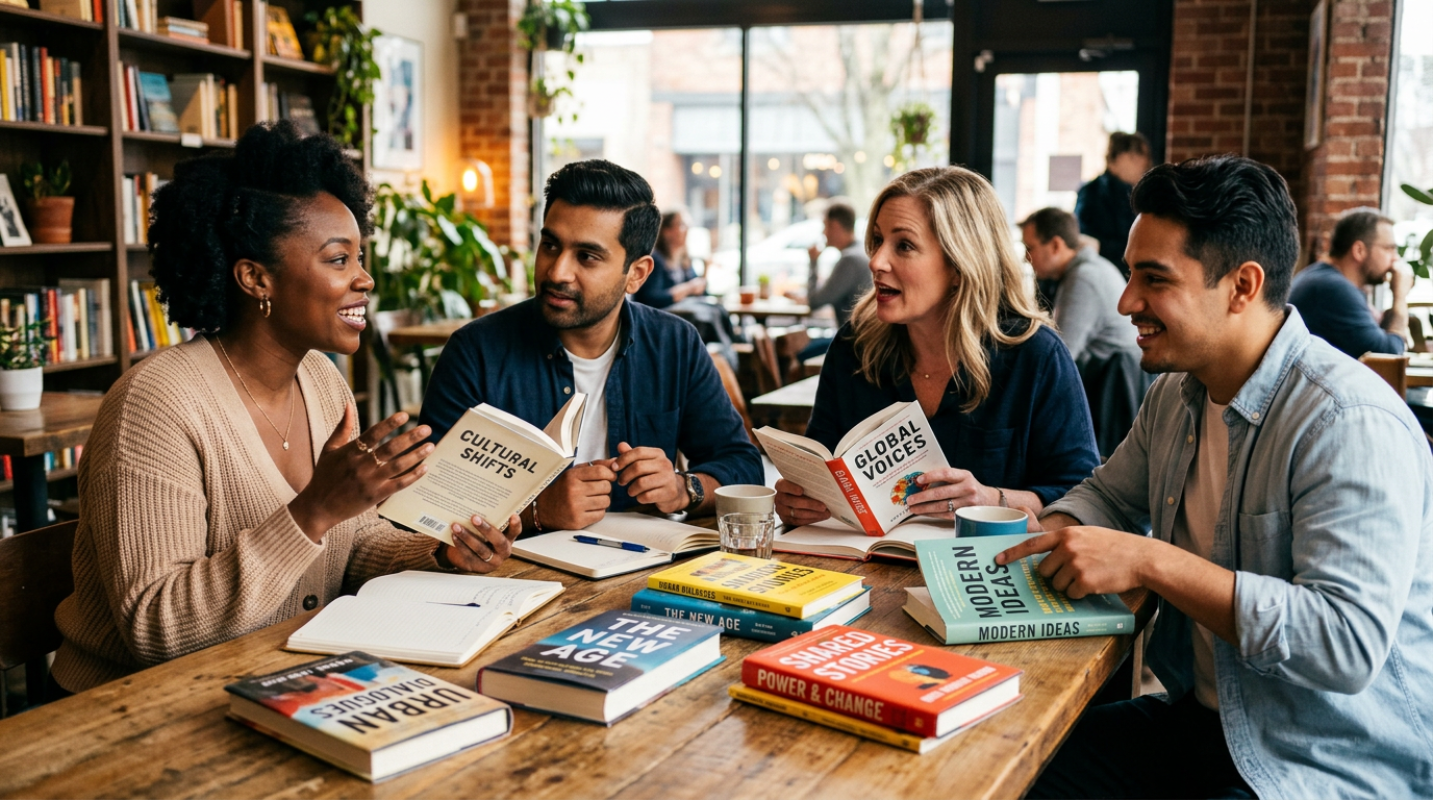
So how do these books go from a pile on your nightstand to a global movement? The answer is community. Platforms like BookTok and Bookstagram have completely changed how nonfiction travels. It’s no longer about romance novels and thrillers. Creators are now "bias-checking" their lives based on cognitive science books or starting viral campaigns for global health.
If you want to help these conversations yourself, start with your own circle. You don't need a formal book club. Asking a friend, "Have you heard about the IKEA effect?" can open a door. The key is to approach these topics with curiosity rather than a desire to be right. When you’re dealing with controversial subjects like those in Peter Beinart’s or Jonathan Haidt’s books, listening is as important as reading.
The lasting impact of these books goes far beyond the initial hype cycle. Although a viral video might be forgotten in a week, the ideas in a well-researched nonfiction book tend to stick. They change how you see your phone, your health, and your community. They turn you from a passive consumer of content into an active participant in culture.