 (Image source: Gemini)
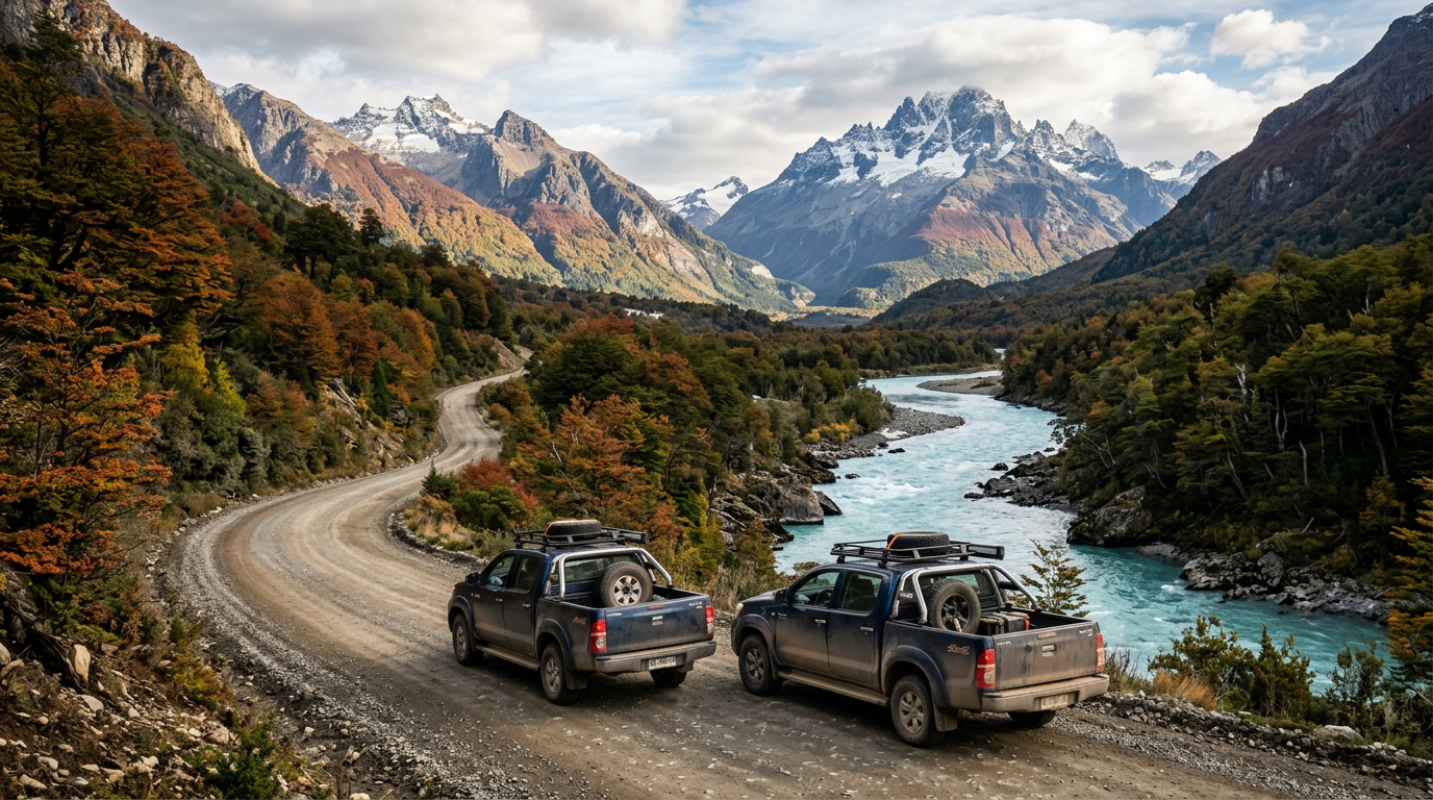
 You’ve probably seen the photos of the Carretera Austral. It’s that winding ribbon of road through the Chilean fjords, flanked by hanging glaciers and turquoise rivers. It looks like the end of the world, and in many ways, it is. But if you show up in January, you might find that the "end of the world" is actually quite crowded.
So how do you experience the raw, untamed Patagonia you’ve been dreaming of? You go during the shoulder season. This means aiming for the windows of late September to November or March to April. It’s the sweet spot where the summer crowds haven’t arrived or have already packed up, leaving you with the road, the wind, and the silence.
Why Shoulder Season is the Secret to Patagonia
Traveling in the shoulder season is like getting a backstage pass to a sold-out show. In the spring months of October and November, the space is waking up. Lupines carpet the roadsides in shades of purple and pink. By March and April, the southern beech trees turn a fiery red and gold that makes the emerald lakes look even more surreal.
The biggest draw is the lack of people. During the peak summer rush from December to February, finding a campsite or a spot on a ferry can feel like a competitive sport. In the shoulder season, that pressure evaporates. You can actually hear the ice cracking at a glacier instead of the chatter of fifty other tourists.
Of course, there’s a trade-off. Patagonian weather is legendary for its mood swings, and those swings are more dramatic in the shoulder months. You might get a day of perfect, crisp sunshine followed by a morning of sleet. But honestly, the moody clouds and mist are what give this region its character. A sunny day in Patagonia is beautiful, but a misty one is haunting.
Mastering the Logistics in the Off-Peak
Driving the Carretera Austral isn't like a standard road trip. It’s 1,240 kilometers of mostly gravel, known locally as ripio, and it requires some planning. In the shoulder season, you need to be even more diligent about your logistics because some services start to wind down.
Ferries are the lifeblood of Ruta 7. There are three mandatory water crossings to finish the whole route. For the 2025 and 2026 seasons, the Hornopirén to Caleta Gonzalo leg remains the biggest hurdle. Even in the shoulder season, you should book this at least two weeks in advance. If you show up without a reservation, you might be sitting at the dock for a day or two watching other cars roll by.
Then there’s the vehicle. Do you really need a 4x4? If you're sticking strictly to the paved sections near Coyhaique, you might survive in a sedan. But for the full experience, a high clearance 4x4 is non-negotiable. The gravel sections can develop a washboard texture that will rattle a small car to pieces. Plus, the best side trips, like the one to Caleta Tortel, are much easier with some ground clearance.
- Fuel Approach: Never let your tank drop below half. Although towns like Chaitén and Cochrane have reliable pumps, the 330 kilometer stretch between Cochrane and Villa O’Higgins is a dead zone for fuel.
- Connectivity: Don't count on your phone. Mobile signal is basically non-existent between towns. Download offline maps before you leave Coyhaique. It’s the digital equivalent of bringing a spare tire.
- Cash Management: Many small guesthouses and campsites in remote areas don't take cards. Although bigger hubs have ATMs, they’ve been known to run out of cash during busy weeks. Carry more Chilean pesos than you think you’ll need.
Must-See Stops Without the Summer Queues
Queulat National Park is home to the Ventisquero Colgante, or Hanging Glacier. In the summer, the trail to the viewpoint can be a line of hikers. In October or April, you might have that view entirely to yourself. Standing there in total silence while watching a massive chunk of ice calve into the waterfall below is an experience that stays with you.
The Marble Caves on General Carrera Lake are another highlight. These swirling blue caverns are carved into marble by centuries of wave action. During the transition months, the light hits the water at a lower angle, which often creates even more intense colors in the caves. Because there are fewer tour boats on the water, your guide might even let you linger a bit longer in the cathedral-like spaces.
If you’re a hiker, Cerro Castillo is the crown jewel. The jagged basalt spires look like something out of a fantasy novel. In the peak season, the trail traffic can be heavy, but in the shoulder months, the path is quiet. Just keep in mind that Chile has moved to a mandatory digital entry system for all national parks.⁴ You have to buy your tickets in advance at pasesparques.cl because they don't sell them at the gate anymore.
Packing Like a Pro for Patagonian Weather
Layering is your only defense. You want a base layer that wicks sweat, a fleece or wool mid-layer for warmth, and a serious waterproof shell. Notice I said waterproof, not water resistant. The northern section of the road is a temperate rainforest that can see over 4,000mm of rain a year. If your gear isn't top tier, you're going to be miserable.
Don't forget the wind. November is particularly famous for its gusts, which can be strong enough to shake a parked van. If you're camping, you need a tent that can handle high winds and heavy-duty stakes. High-quality gear is the difference between an epic adventure and a cold, soggy ordeal.