 (Image source: Gemini)
 Have you ever returned from a vacation feeling like you needed another vacation to recover? We've all been there. You spend three days sprinting between must-see landmarks, clutching a digital checklist while navigating a sea of selfie sticks. In a city like Amsterdam, this frantic pace is the fastest way to miss the actual point of being there.
The Dutch have a word, "gezellig," which doesn't have a direct English translation. It's a mix of cozy, social, and relaxed. You can't experience gezellig if you're checking your watch every ten minutes to make sure you catch a timed entry for a museum. Slow travel is the antidote to this modern exhaustion. It's a philosophy that asks you to stop being a spectator and start being a temporary local.
In 2026, Amsterdam has leaned fully into this mindset. The city is no longer chasing record-breaking crowds. Instead, it's inviting you to stay longer, walk further into the residential neighborhoods, and actually engage with the culture. It's about immersion rather than collection.
Embodying the Local Rhythm
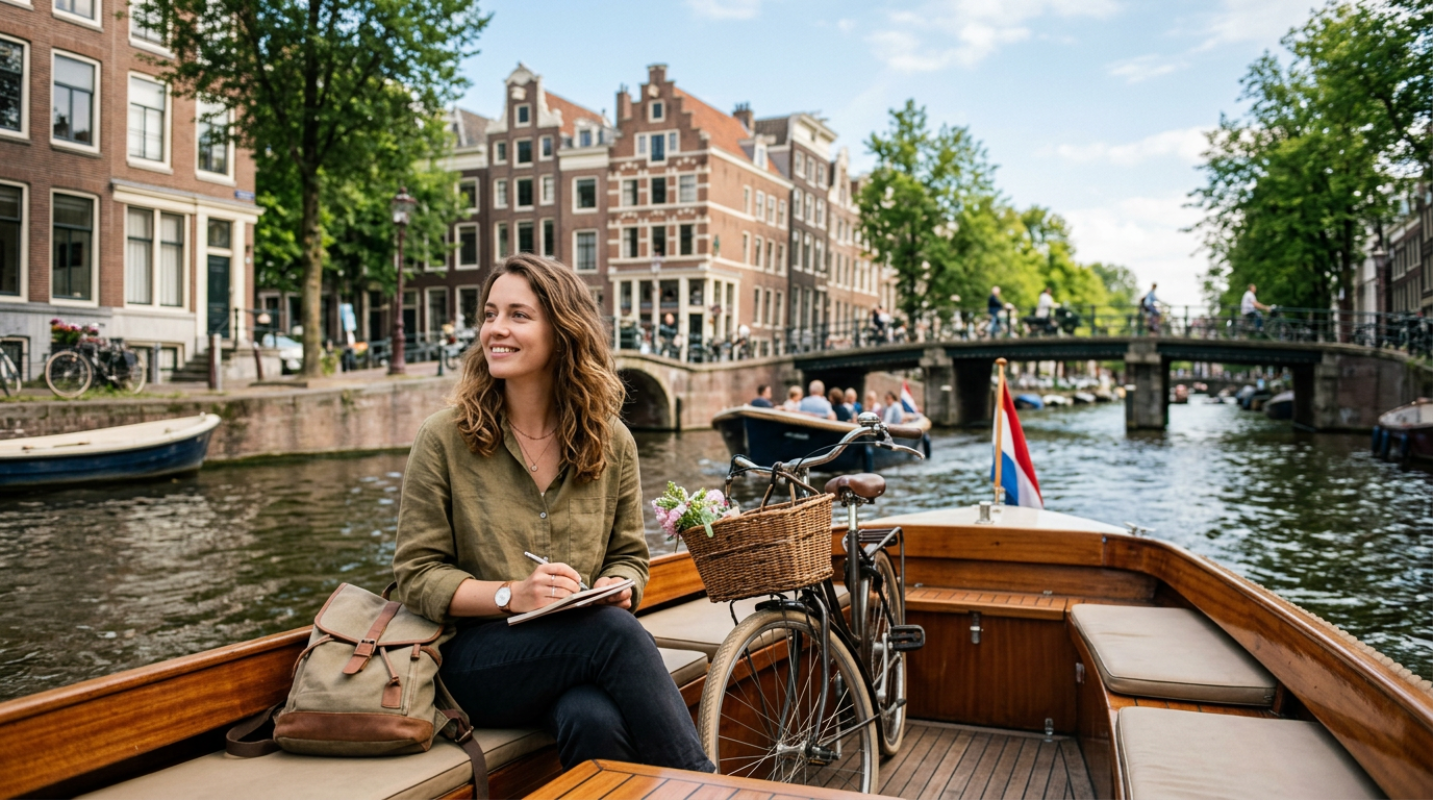
Most people think the best way to see the water is on a glass-topped tourist boat with a pre-recorded audio guide. It's fine, but it's also a bit like watching a movie of a city rather than being in it. If you want to feel the pulse of the water, head behind Centraal Station and jump on the GVB ferry to Amsterdam Noord.
These ferries are free, and they're where the real life of the city happens. You'll stand shoulder-to-shoulder with commuters, students, and artists, all leaning on their bikes as the wind whips off the IJ river. It's a five-minute journey that feels like a transition into a different world. Once you hit the NDSM Wharf, you're in a former shipyard that's now a massive playground for street art and independent creators.
Slow travel also means picking a neighborhood and sticking to it for a day. Don't try to see De Pijp and the Jordaan on the same afternoon. If you choose De Pijp, spend your morning at the Albert Cuyp Market. Don't buy a stroopwafel and leave. Watch the vendors. Grab a coffee at a corner stand and observe the chaotic, beautiful dance of cyclists understanding the narrow streets. This is the daily flow that most tourists miss because they're too busy looking at their maps.
Deep Dives into Culture and Create
The Rijksmuseum is incredible, but it's also a lot of fun. If you want a deeper connection to the city's creative soul, look for the smaller, niche spots. Have you ever heard of FOAM? It's a photography museum housed in a canal house that feels much more intimate than the massive galleries on Museumplein. Or try the Museum Willet-Holthuysen, where you can see exactly how a wealthy 19th-century family lived without the crushing weight of five thousand other visitors.
One of the best ways to practice slow travel is the "brown cafe" experience. These are the traditional Dutch pubs, named for their dark wood interiors and years of history. Find a seat at a place like Café Papeneiland or Café de Sluyswacht. Order a "kopstootje" (a beer and a genever) and sit.
Talk to the person next to you. In Amsterdam, English is spoken almost everywhere, and locals are usually happy to share their favorite hidden garden or a story about their street. These spontaneous conversations are the things you'll remember a year from now, long after you've forgotten the specific details of a painting in a crowded gallery.
Sustainable Stays and Aware Consumption
Amsterdam is serious about its future. The city has implemented some of the strictest tourism management rules in the world. This includes a cap of 100 cruise ships per year to protect the environment and the local quality of life. This shift isn't about keeping people out, but about welcoming those who care about the city's health.
When you're choosing where to stay, look for "green" hotels that actually mean it. Many boutique stays in neighborhoods like Oost or Noord are built with recycled materials and run on 100% renewable energy. Staying in these areas also helps the local economy by spreading your spending away from the saturated city center.
Eating is another way to practice this awareness. Amsterdam has a growing farm-to-table scene. Consider booking a table at De Kas, a restaurant located inside a 1926 greenhouse. They grow most of their own vegetables on-site or at their nearby farm. It's a meal that reflects the season and the soil of the Netherlands. This kind of dining takes time, and that's the point. You're supporting a system that values quality over speed.
The Art of Returning Home Changed
The real magic of slow travel isn't what you do while you're in Amsterdam. It's what you bring back with you. When you stop rushing, you start noticing the "Dutch state of mind." It's a way of being that values efficiency when it's needed, but prizes relaxation and social connection above all else.
You'll find that your memories of the trip aren't a blur of train stations and ticket stubs. Instead, they're vivid snapshots. You'll remember the smell of the rain on the cobblestones in the Jordaan. You'll remember the specific way the light hit the water as you sat on a canal-side bench with a book. You'll remember the laugh of the shopkeeper who explained why their cheese is the best in the province.